
On 16 January 2026, We contributed once again to the Planetary Health doctoral programme at Nagasaki University. This marks the third consecutive year that the university has invited Seneca to participate, reflecting a sustained collaboration focused on practical implementation, financial pathways, and emerging approaches to nature and climate challenges.
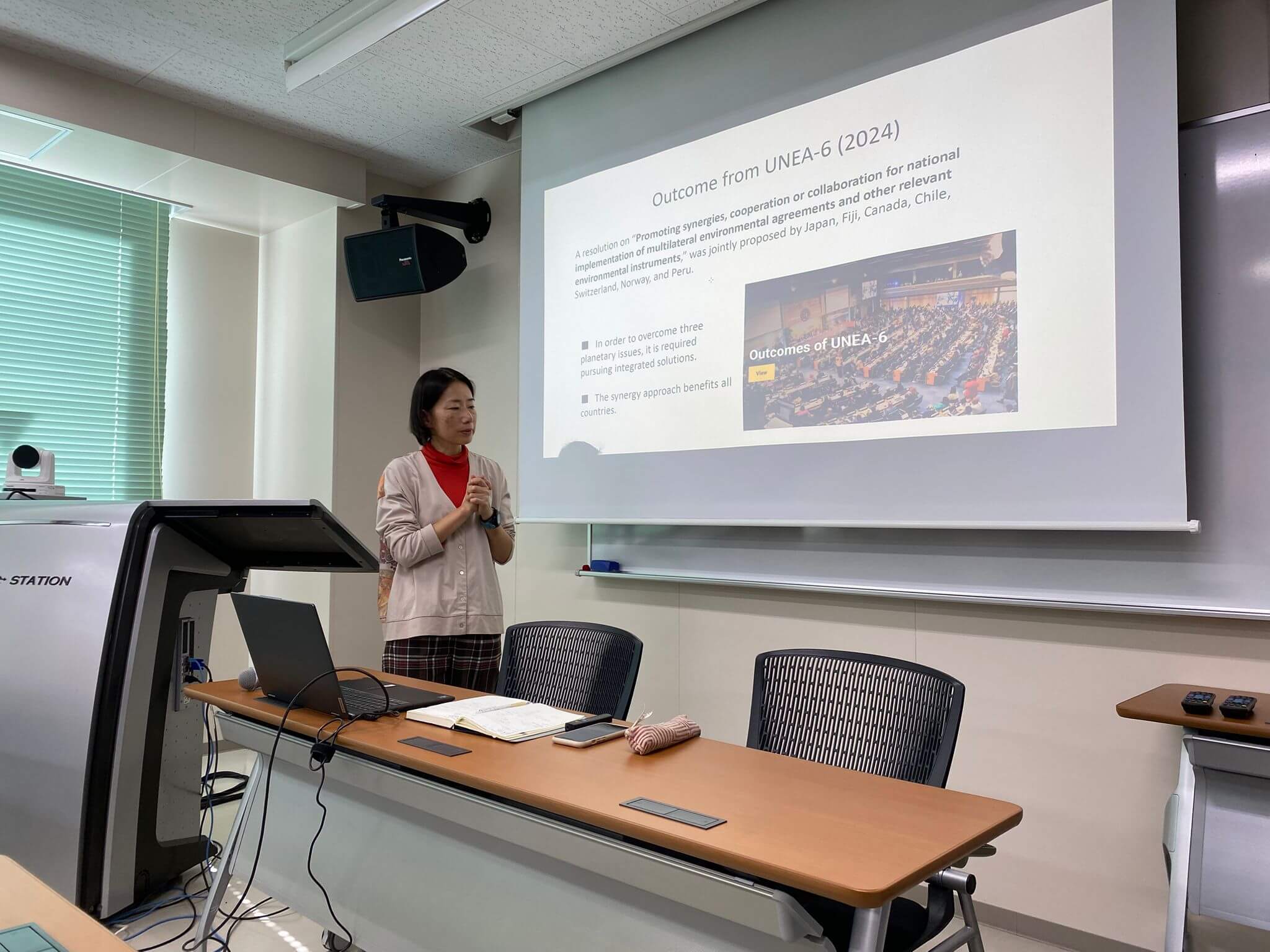
This year’s session was again co‑taught by Emiko Matsuda and Jean‑Marc Champagne, who presented complementary perspectives on the accelerating convergence of climate change, biodiversity loss, and pollution. Ms. Matsuda outlined how recent scientific and policy discussions are shaping expectations for more integrated action and how the concept of the triple planetary crisis is influencing environmental decision‑making across Asia. Her lecture highlighted the growing importance of aligning scientific insight, institutional coordination, and practical approaches to adaptation.
Our contribution addressed the investment and project development dimensions of nature finance. Jean‑Marc highlighted global environmental risk trends, the widening financing gap, and the practical requirements for originating commercially viable nature and climate projects. The examples demonstrated how bankable project structures can support long‑term environmental outcomes while mobilising private capital toward nature based solutions.
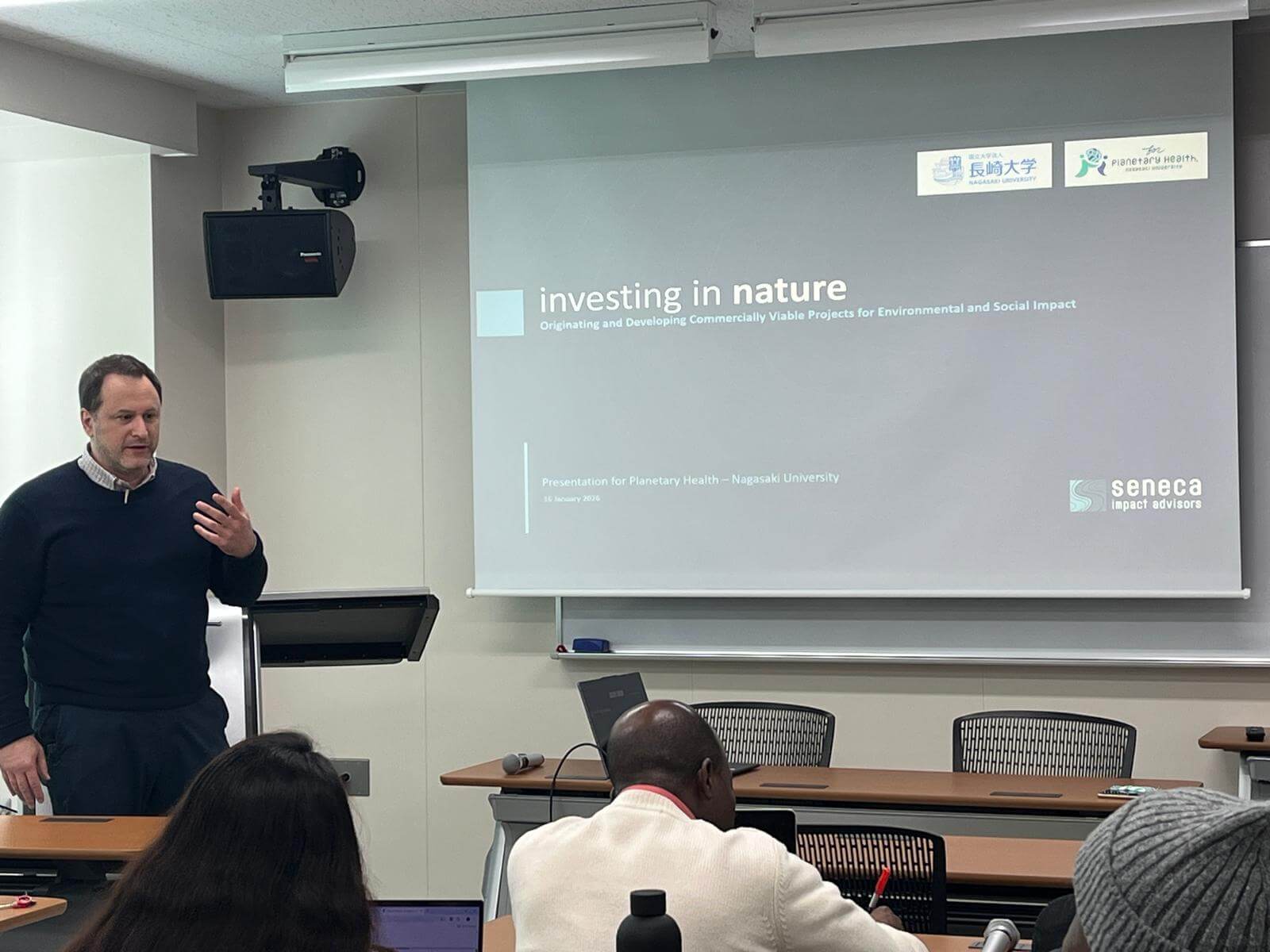
Students engaged actively in discussions about project feasibility, investment criteria, and the steps required to move from policy ambition to implementable action on the ground. Their questions reflected the programme’s continued evolution and an increasing focus on the real‑world constraints and opportunities shaping nature based solutions across diverse geographies.
The cohort this year included students from Ghana, Japan, and Nepal, which added meaningful diversity to the dialogue. Their perspectives highlighted how nature based solutions take shape under very different social, economic, and environmental conditions. Students from Ghana raised questions about how project design can address community‑level needs while remaining investment ready. Students from Nepal reflected on the challenges of implementing nature based projects in mountainous and climate‑vulnerable regions. Students from Japan focused on the balance between scientific evidence, policy development, and local implementation. Together, these viewpoints brought a valuable global lens to the session and reinforced the importance of context‑specific approaches in nature finance.
In addition to the core discussion, the session considered how early‑stage concepts can be strengthened through clearer articulation of expected outcomes, more rigorous assessment of enabling conditions, and better alignment with long‑term community benefits. Several students raised thoughtful questions about what distinguishes a promising idea from a bankable project and how ecological integrity can be protected while meeting investor expectations. These exchanges highlighted the value of introducing practical investment thinking within an academic setting, especially as more students seek to bridge scientific training with applied work in climate and nature finance.
We highly value our ongoing engagement with Nagasaki University and remains committed to supporting the development of future leaders in Planetary Health who can connect academic insight with practical, scalable action.