
Yesterday, we hosted a conversation at our office with energy markets veteran Joseph Jacobelli, Managing Partner at Bourne Impact Capital, together with practitioners working across adjacent sectors.
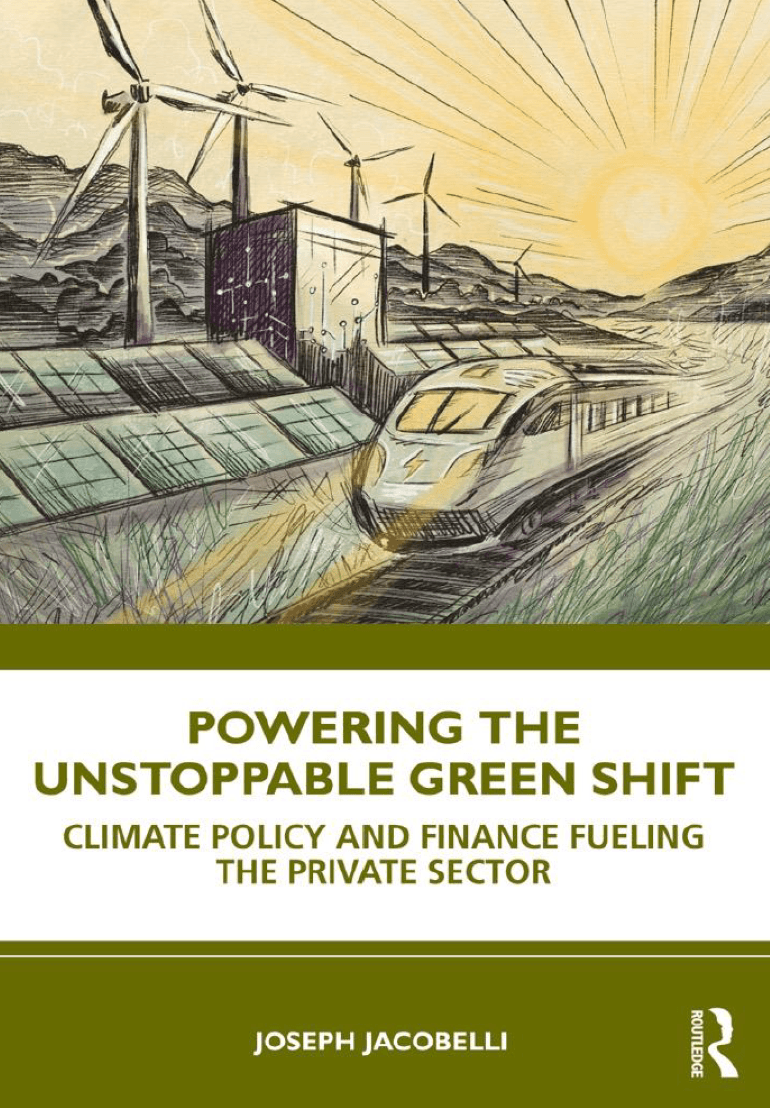
The discussion drew on themes from Joseph’s forthcoming book, Powering the Unstoppable Green Shift, due for release on 15 April, and focused on how the energy transition is unfolding in practice for corporates, investors, and financial institutions.
 A central message of the conversation was that the energy transition is no longer driven primarily by climate commitments or long‑term policy ambition. Instead, it is increasingly shaped by economics, risk, and competitive pressure. While policy still matters, it now acts more as a signal than a driver. Capital flows, cost structures, and risk exposure are doing much of the real work.
Joseph framed corporate transition through the interaction of three forces: policy, finance, and business execution. Policy provides direction, finance determines what is bankable, and businesses ultimately decide what gets built and scaled. When these elements are aligned, transition accelerates. When they are not, progress slows regardless of stated ambition.
Risk featured heavily in the discussion. Not risk as a distant climate concept, but as an immediate commercial concern. Physical risks, transition risks, and liability risks are already affecting asset values, insurance availability, supply chains, and the cost of capital. For many companies, these factors are now influencing strategic decisions more than net‑zero targets or disclosure frameworks.
At the same time, Joseph emphasised that the transition is also creating significant opportunity. Falling clean energy costs, advances in digital and hardware solutions, and the rapid growth of energy demand across Asia are reshaping markets. Companies that understand these dynamics and position early are not only managing downside risk, but building long‑term advantage.
The conversation reinforced a broader point: the energy transition is no longer abstract. It is increasingly a question of competitiveness, resilience, and strategic positioning in a changing risk landscape.