
As part of our ongoing work with the Ministry of the Environment, Japan (MOEJ), Seneca Impact Advisors has been engaging with entrepreneurs, investors, and partner organisations across Indonesia to identify opportunities that can advance climate adaptation, nature-based solutions, and sustainable development.
Indonesia is home to a rapidly growing ecosystem of enterprises working to address environmental challenges through market-based approaches. From sustainable agriculture and forestry to circular economy solutions and innovative biomaterials, entrepreneurs across the country are developing practical solutions that can strengthen climate resilience, reduce environmental pressures, and support local livelihoods. Yet many of these enterprises continue to face challenges in accessing the capital, partnerships, and support needed to scale.
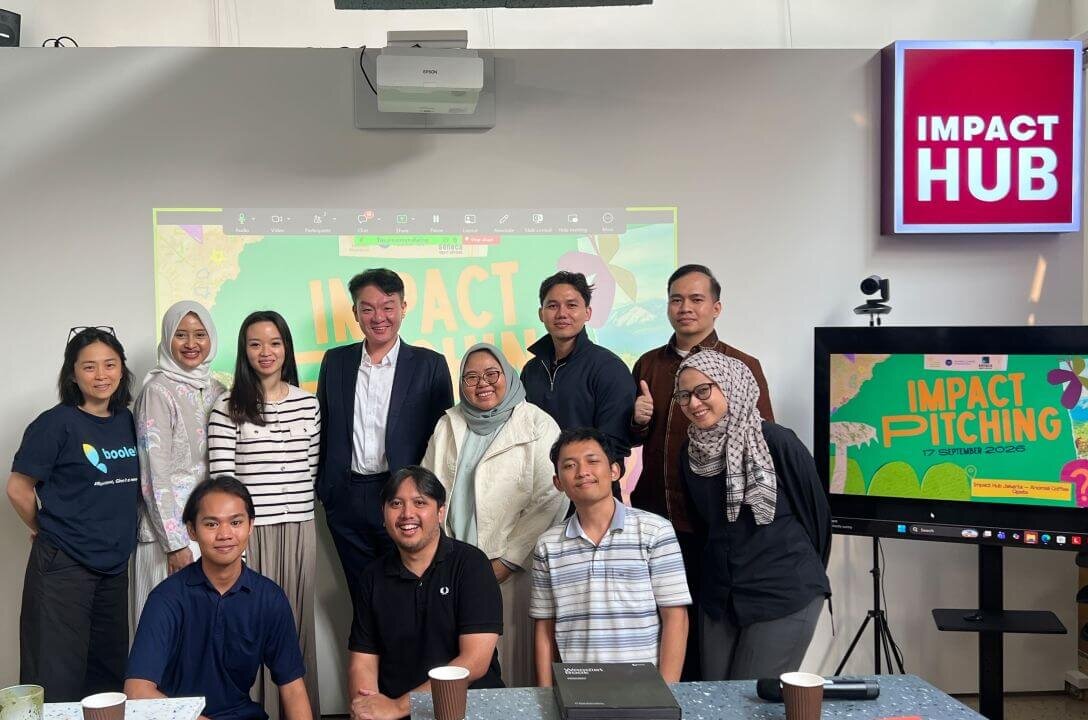
As part of these efforts, Seneca Impact Advisors co-hosted The Impact Pitching Session in Jakarta alongside the Paloma Sjahrir Foundation and Koalisi Ekonomi Membumi (KEM). Representing Seneca, Stanley Tsai and Gabriella Natasha participated in the session, which brought together Indonesian enterprises developing innovative projects across sustainable agriculture, forestry, circular economy, biomaterials, and climate resilience.
The projects represented a broad range of sectors and approaches. Discussions covered sustainable forestry, community-based supply chains, circular economy initiatives, alternative materials, soil health technologies, and climate-smart agriculture. Collectively, they highlighted the diversity of solutions emerging within Indonesia’s impact economy and the important role that local innovation can play in addressing climate and nature-related challenges.
For Seneca, engagements of this nature are an important part of understanding where investment opportunities may emerge and where barriers continue to exist. Across many developing markets, there is no shortage of innovative ideas, capable entrepreneurs, or high-impact solutions. The greater challenge is often connecting these opportunities to the financial, technical, and institutional support required to move from early-stage innovation to large-scale implementation.
The discussions during the session highlighted a common challenge facing many impact enterprises. While innovative solutions are emerging across sectors such as sustainable agriculture, forestry, circular economy, and climate resilience, access to growth capital often remains limited. Addressing this challenge is central to Seneca’s broader mission. Through our work, we seek to help connect promising projects and enterprises with the financing, partnerships, and support needed to expand their impact and contribute to a more resilient and sustainable future.
We would like to thank the Paloma Sjahrir Foundation and KEM for convening the session and creating a valuable platform for dialogue and collaboration.