Hong Kong NbS Week 2026: Nature Finance, Urban Resilience, and the Future of Hong Kong’s Landscapes
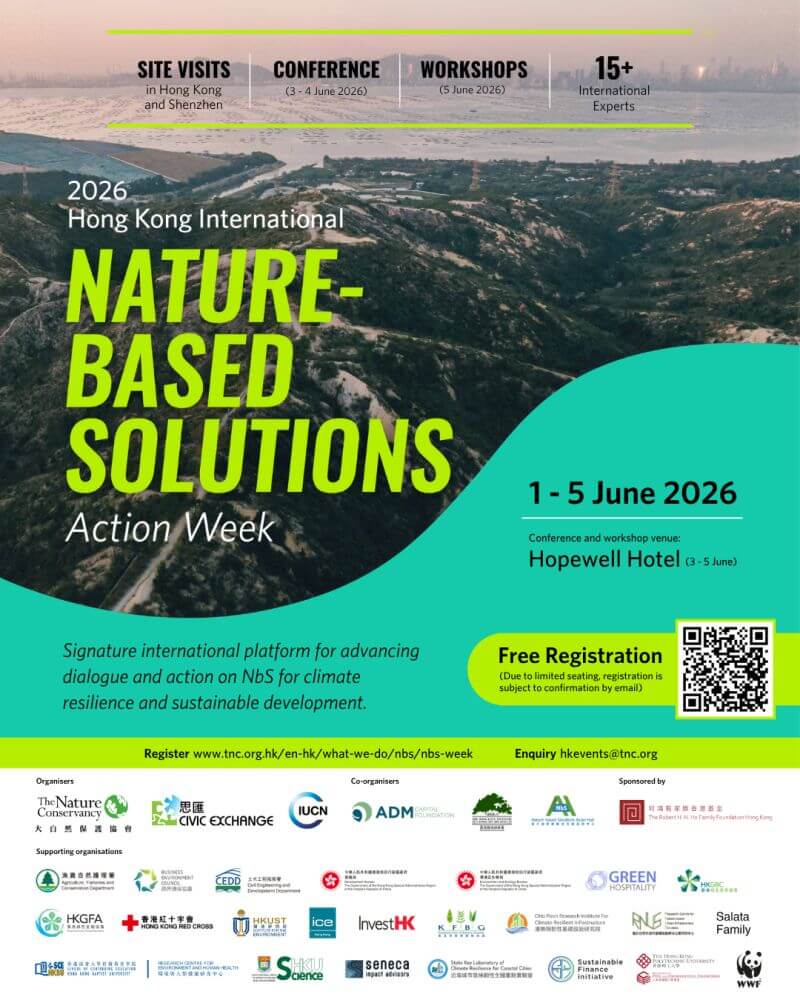 Held on Thursday, 4 June 2026 at Hopewell Hotel in Hong Kong, and co-organized by The Nature Conservancy, Civic Exchange, and IUCN, Hong Kong Nature-based Solutions Week 2026 brought together governments, NGOs, researchers, financial institutions, developers, and practitioners to explore how nature-based solutions (NbS) can move from pilot projects to integrated economic and infrastructure systems.
Across multiple sessions and workshops, the discussions focused not only on biodiversity and conservation, but increasingly on implementation, financing, urban resilience, and the role of private capital. A recurring theme throughout the week was that nature-based solutions can no longer be treated as peripheral environmental initiatives. They are becoming central to how cities think about climate adaptation, infrastructure, flood management, and long-term economic resilience.
The event also highlighted the growing importance of Hong Kong within broader regional conversations around sustainable urban development, particularly in relation to the Northern Metropolis, the Greater Bay Area, and emerging approaches to blended and market-based finance for nature.
Day 2: From Policy Discussion to Implementation Pathways
Day 2 of the conference focused heavily on practical implementation pathways for nature-based solutions, particularly within rapidly urbanizing and infrastructure-intensive landscapes. Sessions explored how Hong Kong can better integrate ecological systems into long-term development planning, while also addressing the financial and institutional barriers that continue to limit investment in NbS at scale.
A major focus was the Northern Metropolis and its role as both a large-scale economic development zone and a critical ecological landscape. Discussions emphasized the importance of wetlands, forests, coastal ecosystems, and blue-green infrastructure in reducing climate and disaster risk while supporting long-term urban resilience.
Several speakers also highlighted the need to shift away from viewing nature solely through a conservation lens. Instead, there was increasing recognition that ecosystems provide measurable economic value through flood reduction, heat mitigation, climate adaptation, water management, and long-term infrastructure resilience.
The day reflected a broader shift occurring globally: the transition from discussing why nature matters to discussing how to finance, structure, and operationalize nature-positive development.
Speaker Session: Market-Based and Blended Finance for NbS
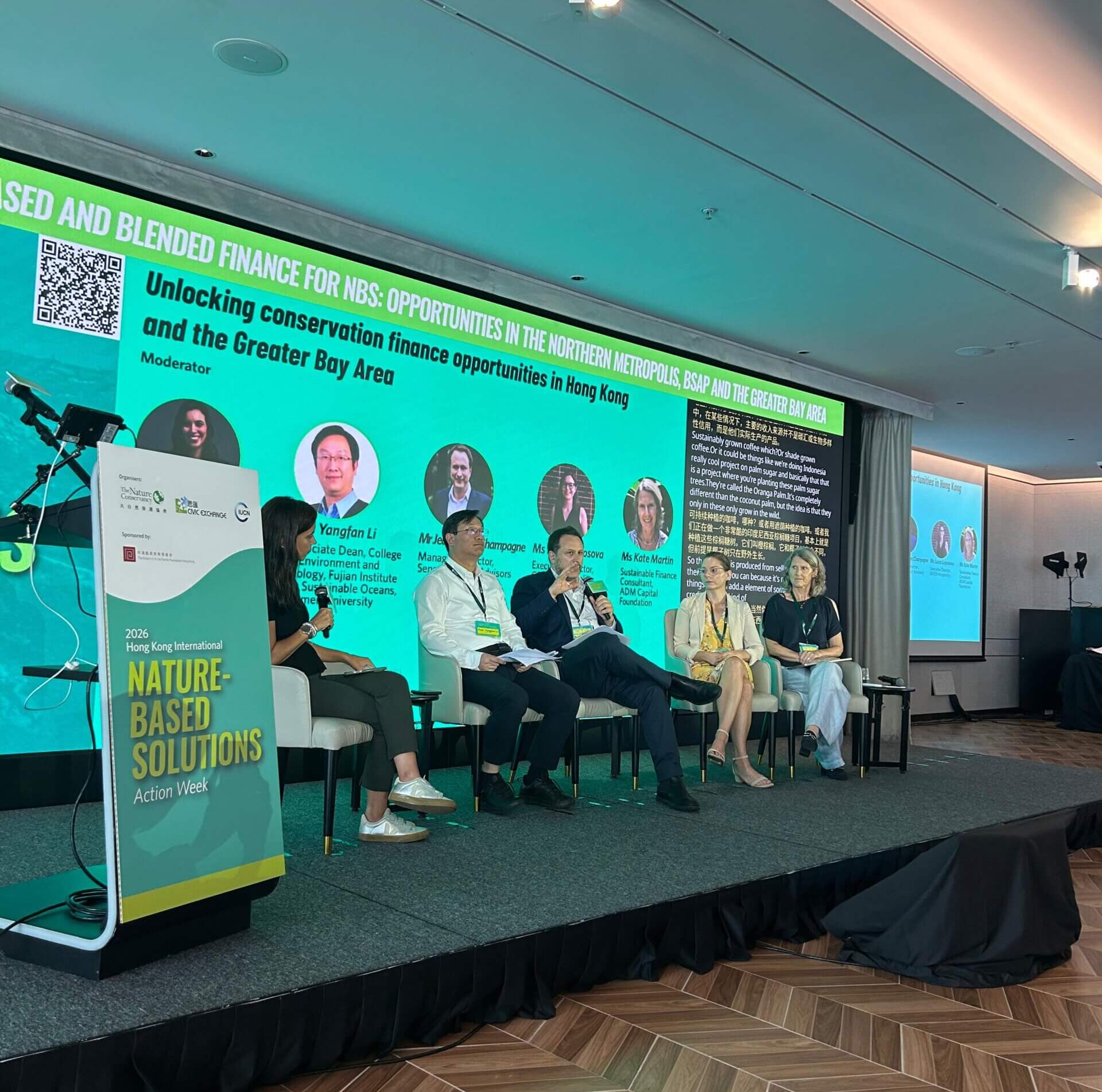
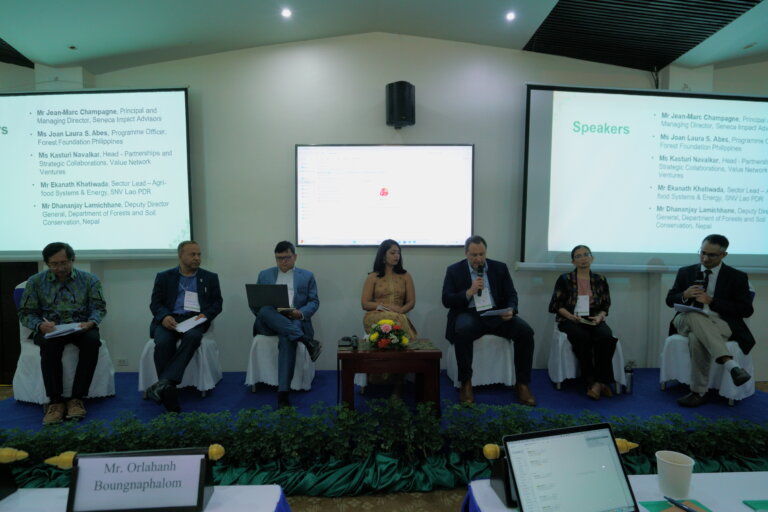
As part of the Day 2 program, Seneca Impact Advisors participated in Speaker Session 3: “Market-based and blended finance for NbS: opportunities in the Northern Metropolis, BSAP and the Greater Bay Area.”
The session explored how public and private capital can work together to support large-scale nature-based solutions in Hong Kong and the wider region.
The discussion focused on a central challenge facing NbS globally: while ecosystems provide real economic and climate resilience value, financing structures often fail to capture or monetize those benefits in ways institutional capital can engage with.
Speakers discussed the importance of:
- Positioning NbS as climate adaptation and resilience infrastructure
- Creating investment structures capable of mobilizing long-term private capital
- Developing stronger policy alignment and incentives
- Quantifying avoided losses and ecosystem services
- Building scalable project structures with credible measurement frameworks
The session also examined how Hong Kong’s development trajectory, particularly through the Northern Metropolis, creates a unique opportunity to integrate ecological systems directly into urban growth and infrastructure planning.
Seneca’s Talk: Innovative Finance for Hong Kong Wetlands
During the session, Jean-Marc Champagne, Managing Director of Seneca Impact Advisors, presented on Innovative Financing for Hong Kong Wetlands. The presentation focused on how wetlands and broader nature-based systems in the Northern Metropolis can be financed at scale by reframing ecosystems not simply as conservation assets, but as critical climate adaptation infrastructure. It began by positioning the Northern Metropolis as a “landscape of duality” — a region designed simultaneously as a major economic development zone and an ecological system.
With approximately 30,000 hectares of development area, including significant wetland and forest systems around Deep Bay and Mai Po, the Northern Metropolis presents both substantial ecological value and major long-term climate resilience challenges.
A key argument presented during the session was that traditional conservation framing limits access to large pools of private capital. While wetlands and ecosystems clearly reduce flood risk, heat stress, and climate vulnerability, these benefits are often not structured in ways investors, insurers, or financial institutions can directly engage with. Jean-Marc argued that reframing NbS as climate adaptation infrastructure opens the door to significantly larger financing opportunities involving insurers, developers, institutional investors, and capital markets.
Three Financing Pathways for Nature-Based Solutions
Three complementary financing pathways were outlined for scaling nature-based solutions in Hong Kong.
1. Insurance-Linked Resilience Financing
The first pathway focused on insurance-linked resilience financing.The concept is based on the idea that if wetlands, forests, and other ecosystems reduce future disaster losses, insurers and reinsurers have a direct financial interest in supporting those systems. Discussed was the importance of quantifying risk reduction through hydrological and climate modelling, particularly around flood mitigation and stormwater absorption. Once these avoided losses become measurable, they can form the basis for pooled insurance mechanisms and eventually larger capital market structures such as insurance-linked securities. This shifts ecosystems from being viewed purely as environmental assets toward being recognized as measurable risk-reduction infrastructure.
2. Developer-Led NbS Investment
The second pathway examined the role of developers in financing nature-based solutions. The presentation emphasized that developers already shape long-term land-use outcomes and therefore play a central role in determining whether NbS becomes integrated into urban systems. Three major incentives were discussed:
- Reduced climate and insurance risk
- Improved asset quality and long-term project attractiveness
- Regulatory and financial incentives that reward NbS integration
Also highlighted were policy tools such as floor area bonuses, expedited approvals, preferential financing structures, and long-term stewardship requirements. The central message was simple: when incentives are aligned, nature-based solutions can become part of standard development economics rather than optional environmental add-ons.
3. Sustainable Aquaculture and Productive Landscapes
The third pathway focused on sustainable aquaculture and productive wetland landscapes. Rather than treating wetlands as economically unproductive areas, the presentation explored how ecological restoration and revenue-generating activities can operate together. Examples discussed included:

- Mangrove buffers
- Polyculture systems
- Floating wetlands
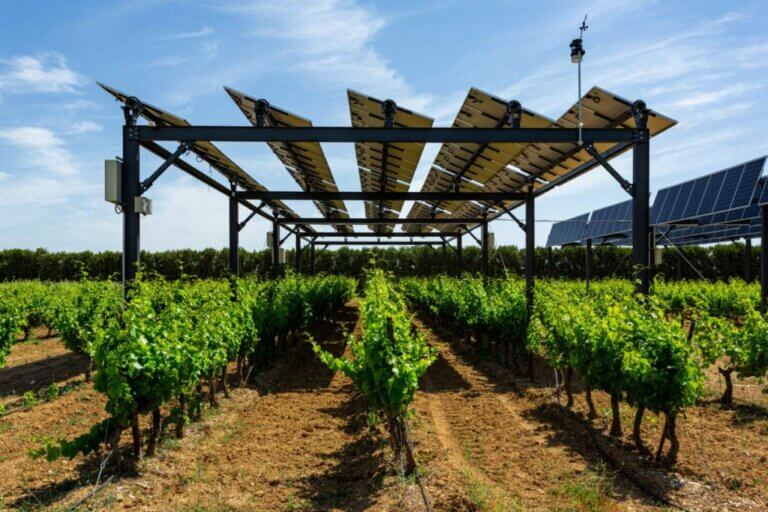
- Aquavoltaics
- Integrated water-energy systems
The talk highlighted the opportunity represented by more than 1,000 hectares of existing or restorable fishponds and water bodies in the Northern Metropolis.
This pathway demonstrated how nature-based solutions can simultaneously support biodiversity, flood resilience, livelihoods, food systems, and economic productivity.
Quantifying the Value of Wetlands
A major component of the presentation focused on the importance of quantifying avoided losses.
Drawing on recent Hong Kong modelling work, the presentation highlighted how wetland systems such as Gei-Wai can significantly reduce flood losses during extreme weather events.
According to the analysis presented, large-scale Gei-Wai restoration combined with forest systems could reduce flood losses by nearly 10%, representing approximately HK$54 million in avoided damages during a major compound flood event. Jean-Marc emphasized that once these avoided losses become measurable and credible, nature-based solutions become significantly more investable. This creates a clearer basis for engagement from insurers, developers, financial institutions, and long-term investors.
Moving from Conservation to Infrastructure
The presentation concluded by emphasizing that the core challenge facing nature-based solutions is not necessarily a lack of capital. Rather, the challenge is creating the institutional structures, incentives, metrics, and financing mechanisms capable of connecting existing capital pools with investable nature-positive projects.
The presentation argued that ecosystems should increasingly be treated as critical infrastructure alongside housing, transport, and flood management systems. Achieving this transition will require:
- Stronger policy alignment
- Clear project structures
- Better valuation methodologies
- Credible measurement frameworks
- Long-term coordination across the public and private sectors
Hong Kong already possesses many of the core ingredients needed to advance this transition. The next phase will depend on whether those elements can be aligned into scalable financing and implementation structures capable of supporting long-term urban resilience.
As discussions throughout Hong Kong Nature-based Solutions Week 2026 demonstrated, the conversation is rapidly evolving beyond conservation alone. Increasingly, the focus is shifting toward how nature can become embedded directly into the economic, financial, and infrastructure systems shaping the future of cities.