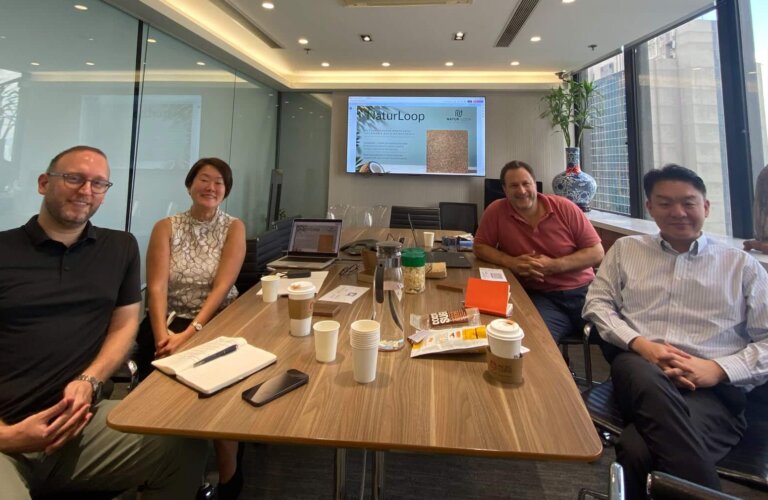
Seneca Impact Advisors was pleased to join RECOFTC for Community forests for a biodiverse future: Governance, knowledge and action in the Asia-Pacific region, a regional conference focused on the role of community forests in biodiversity conservation, climate resilience, and sustainable livelihoods.
The event brought together community leaders, government agencies, researchers, practitioners, civil society organizations, and development partners from across the Asia-Pacific region to explore how community forestry can contribute more directly and measurably to biodiversity outcomes.
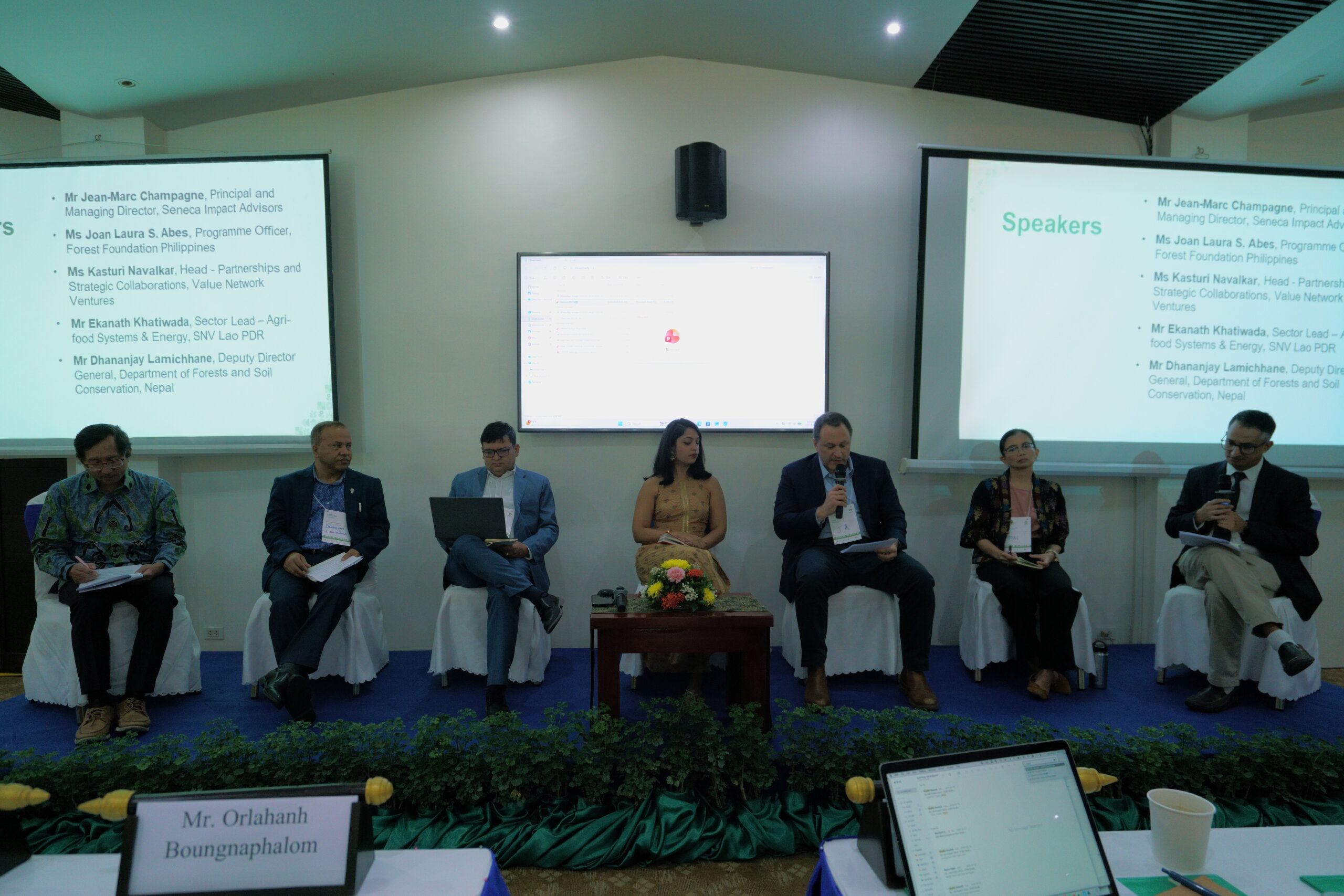
Seneca’s Jean-Marc Champagne joined Ms. Joan Laura Abes of Forest Foundation Philippines, Ms. Kasturi Navalkar of Value Network Ventures, Mr. Dhananjaya Lamichhane of Nepal’s Department of Forest and Soil Conservation, and Mr. Ekanath Khatiwada of SNV Lao PDR for the panel Sustainable financing for biodiversity conservation in community forests. The session was moderated by Mr. Santosh Raj Pathak and Mr. Gamma Galudra of RECOFTC.
The discussion focused on a central challenge in nature finance: forests generate real value through timber, carbon, water, honey, non-timber forest products, livelihoods, and long-term ecosystem services, yet the communities keeping those forests standing are often excluded from the financing systems designed to support nature.
This is not about project quality. Community forests work. The problem is how capital moves, who shapes the terms, and whether financing structures are designed around the realities of community-led conservation.
Jean-Marc’s contribution focused on the bankability gap facing community forests. Many community-led forest initiatives generate real environmental, social, and economic value, but that value does not always fit neatly into the financial structures investors are used to underwriting. Cashflows may be fragmented. Time horizons may be long. Tenure can be complex. Benefits may come from multiple sources across a landscape rather than from a single contract or asset.
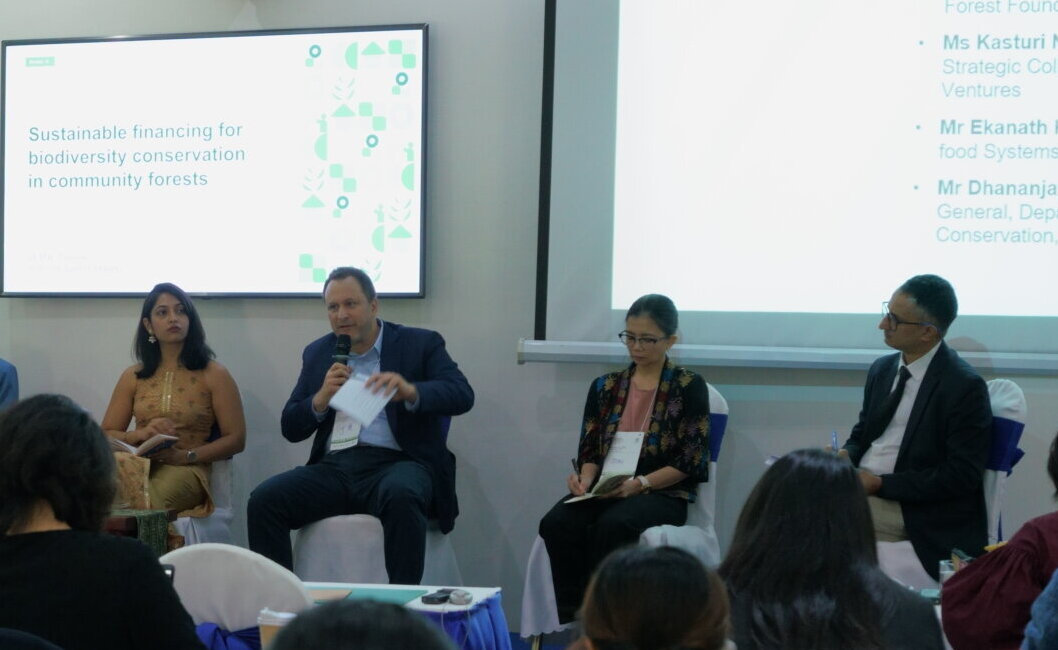
The panel highlighted that the transaction costs of becoming investment-ready should not fall on communities. Project preparation, structuring, monitoring, legal work, and investor engagement require resources. Donors, governments, and intermediaries have an important role to play in absorbing that burden and helping community forest initiatives reach the point where they can attract appropriate capital.
Tenure security was also central to the discussion. Community stewardship cannot be treated as an informal starting point while financing structures are built elsewhere. Legal recognition, governance arrangements, and long-term rights are part of the foundation that allows communities to manage forests, protect biodiversity, and participate meaningfully in financing arrangements.
The discussion also reinforced that livelihoods are not a side issue. Coffee, honey, ecotourism, non-timber forest products, and other forest-linked enterprises are often central to why communities continue to protect and manage forest landscapes. For young people in particular, viable livelihoods can help make staying connected to the forest a realistic choice rather than a sacrifice.
A key message from the panel was that communities should not be treated as backdrops to conservation finance. They are not simply beneficiaries of projects designed by others. They need to be involved as co-designers, with a real voice in how success is defined, how risks are shared, and how benefits are distributed.
Blended finance can help, but only when it is used to strengthen the underlying project rather than make complexity look easier from the outside. Grants, concessional capital, guarantees, insurance, and flexible repayment structures can all play useful roles when they support project preparation, community governance, monitoring systems, and long-term ecological outcomes.
The panel reinforced a point that sits at the heart of Seneca’s work: financing for nature must be built around real landscapes, real livelihoods, and real institutions. Community forests are not simple assets. They are living systems shaped by ecology, rights, governance, culture, and markets. If finance is going to support biodiversity conservation at scale, it needs to work with that complexity rather than avoid it.
We are grateful to RECOFTC for the invitation and for convening such a thoughtful discussion. We look forward to continuing the partnership and exploring practical ways to move from discussion to implementation.