Laos produces some of Southeast Asia’s most distinctive coffee. The Bolaven Plateau remains its best-known growing region, while Arabica production in the northern uplands is creating new opportunities for farming communities, local businesses and international buyers. Coffee contributes to rural incomes and agricultural trade, supported by established origins, experienced producers, increasingly resilient production landscapes and growing international recognition.
The future of Lao coffee, however, cannot be measured by production alone. By the time coffee reaches a café or supermarket shelf, much of its final value has been created through processing, grading, quality assurance, storage, logistics, roasting, branding and distribution. These activities influence the price paid by consumers and determine how that value is divided across the supply chain. The larger question is therefore not simply how Laos can produce more coffee. It is how the country can retain more value from every harvest.
Coffee Is More Than a Crop
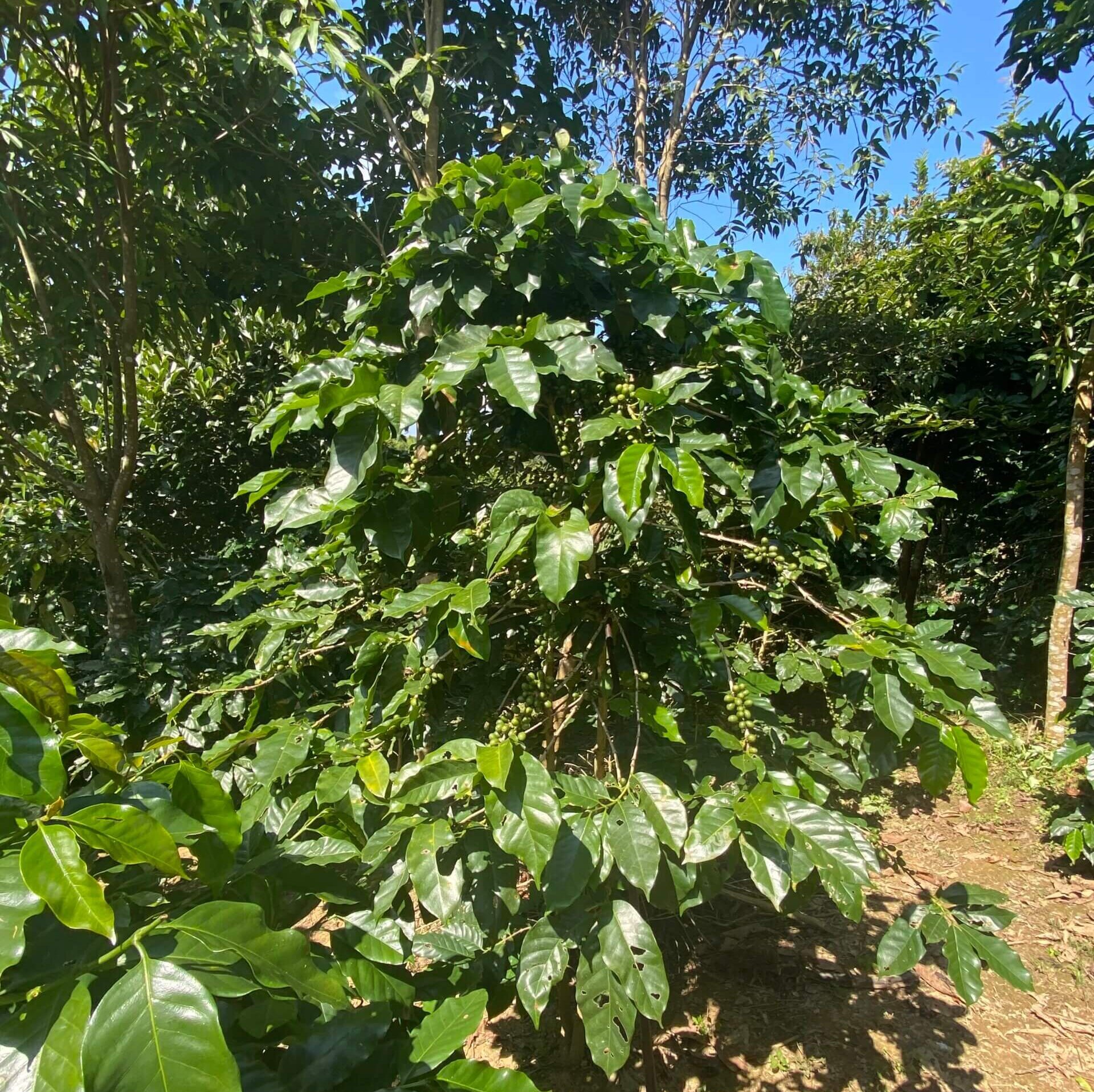
Coffee development is often approached primarily as an agricultural challenge. Better planting material, stronger farming practices, farmer training and higher yields all matter, but so do climate resilience and the health of the landscapes on which coffee production depends. Agroforestry, shade management, soil and water conservation, and more diverse farming systems can help producers respond to changing conditions while protecting the natural resources that support long-term production. Yet cultivation is only the beginning of the value chain. Improvements on the farm will have limited economic impact if farmers and businesses are not connected to quality systems, processing capacity and viable markets.
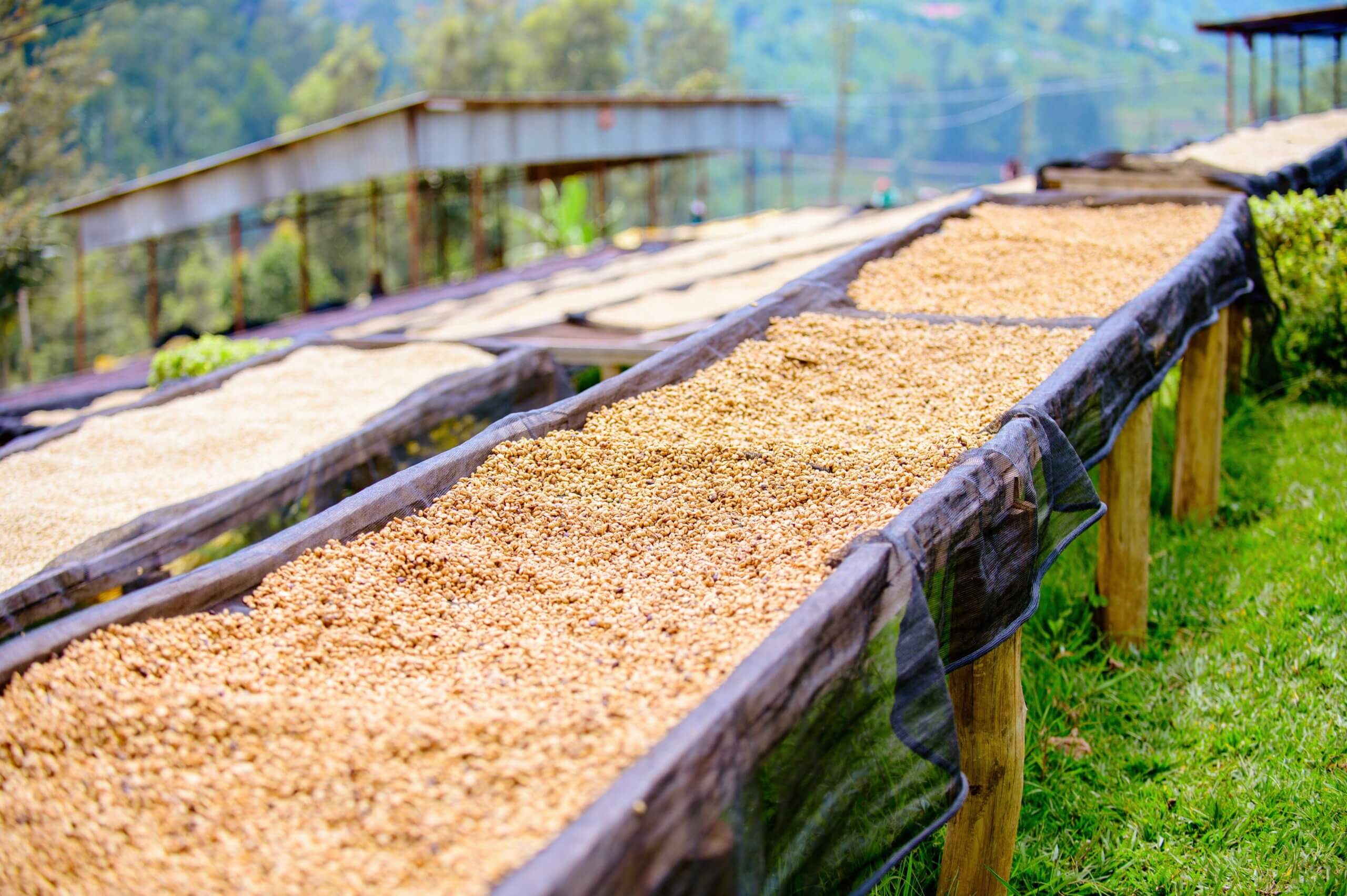
After coffee is harvested, it must be processed, dried, sorted, stored and prepared for sale. Exporters require consistent quality and dependable supply, while buyers increasingly want information about origin, production practices and traceability. Each stage creates value, but weaknesses or gaps at any point can prevent producers and Lao businesses from participating in the more valuable parts of the industry.
A stronger coffee economy will therefore depend on the services, infrastructure, businesses and commercial relationships that move coffee into suitable markets. This does not mean every activity must take place in Laos. The opportunity is to identify where additional domestic activity could improve quality, strengthen local businesses and retain more of the value already being generated.
From a Coffee Laboratory to a Wider Question
Several years ago, Seneca examined how a coffee laboratory could support the Lao coffee sector through testing, grading, training and quality assurance. Objective quality information can improve transparency between sellers and buyers, help producers understand their coffee and strengthen confidence across the supply chain.
Further examination pointed towards a broader issue. A laboratory cannot create value in isolation. Quality services must respond to real demand, follow recognised standards and connect with processing, training, traceability and markets. Information about quality only becomes useful when producers and businesses can use it to improve coffee, meet buyer requirements or access stronger markets. The laboratory remains relevant, but it is one component of a larger system. The more important question is what combination of quality, resilient production, processing, market access and finance would enable Laos to capture more value.
Building from What Already Exists
Laos is not starting from an empty page. Public institutions, industry organisations, businesses, producer groups and international partners have already invested considerable effort in the sector. The Ministry of Industry and Commerce and the Ministry of Agriculture and Forestry led the development of the Lao PDR Coffee Sector Export Roadmap for 2021 to 2025, with contributions from sector stakeholders and associations and technical assistance from the International Trade Centre under the European Union-funded ARISE Plus Lao PDR programme.
International programmes have addressed different parts of the value chain. The USDA-funded CLEAN project, implemented by Winrock International, supported post-harvest practices, quality compliance, certification and market connections. Working with the Coffee Quality Institute, it also introduced coffees from Lao cooperatives to specialty buyers in the United States.
France has supported Lao coffee development for more than two decades through the Agence Française de Développement. Earlier AFD-supported work under RECoSeL combined organic Arabica production under forest cover with producer organisation, processing, collective sales and buyer partnerships. That cooperation continues through the newer Green CUP initiative, launched in 2024 with support from France and the European Union to strengthen quality, climate resilience and inclusion across the Lao coffee and tea value chains.
Japan has supported value-chain development through the COFFEE-JAPAN project, funded by the Government of Japan and implemented by the World Food Programme in partnership with the Lao Ministry of Agriculture and Forestry, Japanese company Saka no Tochu and Lao fair-trade business Saffron Coffee. The project connects smallholder production and quality improvements in Luang Prabang with marketing and access to the Japanese market. More recently, the Asian Development Bank included coffee among the priority commodities under its US$65.8 million Sustainable Agrifood Systems Sector Project, which addresses climate-resilient production, access to finance and technical services, agricultural value chains, rural infrastructure and food-safety laboratory accreditation.
Together, these initiatives have created an important foundation. The next challenge is not simply to add another project, but to understand which capabilities and market relationships remain active, where the value chain continues to break down and how the foundations already established can support a more connected coffee economy.
The Next Opportunity
Experience across the sector suggests that the next stage should focus on the connections between different parts of the value chain. Quality improvement is more valuable when it responds to buyer requirements. Sustainable production is more durable when it creates an economic benefit for farmers. Processing infrastructure is more likely to succeed when it has reliable supply, capable management and identifiable demand. Market promotion is most useful when it produces lasting commercial relationships.
Stronger quality systems could help producers improve consistency and communicate the characteristics of Lao coffee more effectively. They could also help distinguish coffee from the Bolaven Plateau and the northern uplands rather than presenting all Lao production as a uniform commodity. Greater domestic value addition may also be possible through improved processing, drying, sorting, storage and export preparation, provided investments respond to real market demand.
Climate resilience presents another opportunity. Coffee grown within agroforestry systems can contribute to healthier soils, improved water management, biodiversity and greater resilience to changing conditions. These benefits also support the long-term quality and reliability of coffee production, but they must be linked to commercial incentives. Farmers cannot be expected to absorb the costs of improved environmental practices while the resulting value is captured elsewhere in the supply chain.
Finance connects these opportunities. Farmers, processors and exporters have different capital needs, while shared infrastructure and environmental activities may create benefits extending beyond one business. Some projects may require grants or technical assistance, while others may be suitable for working-capital facilities, equipment finance, concessional funding or commercial investment.
Looking Towards 2035
The foundations of a stronger Lao coffee economy are already present. Laos has distinctive origins, experienced producers, active businesses, sector institutions, technical expertise and growing international interest. The opportunity now is to build on these strengths, address the points where value continues to leave the country and strengthen the connections between production, quality, healthy landscapes and markets.
Seneca is calling this longer-term ambition Lao Coffee 2035. It reflects a future in which Lao coffee is recognised not only for where it is grown, but for the quality, resilience and value created throughout its journey to market. Reaching that future will require capable Lao businesses, committed international partners and capital suited to the needs of the sector. If these elements can be brought together, coffee can support an industry that retains greater value in Laos while strengthening rural livelihoods and the landscapes on which its future depends.